How Your Lungs and Heart Work Together — And the Warning Signs You Shouldn't Ignore
Quick answer
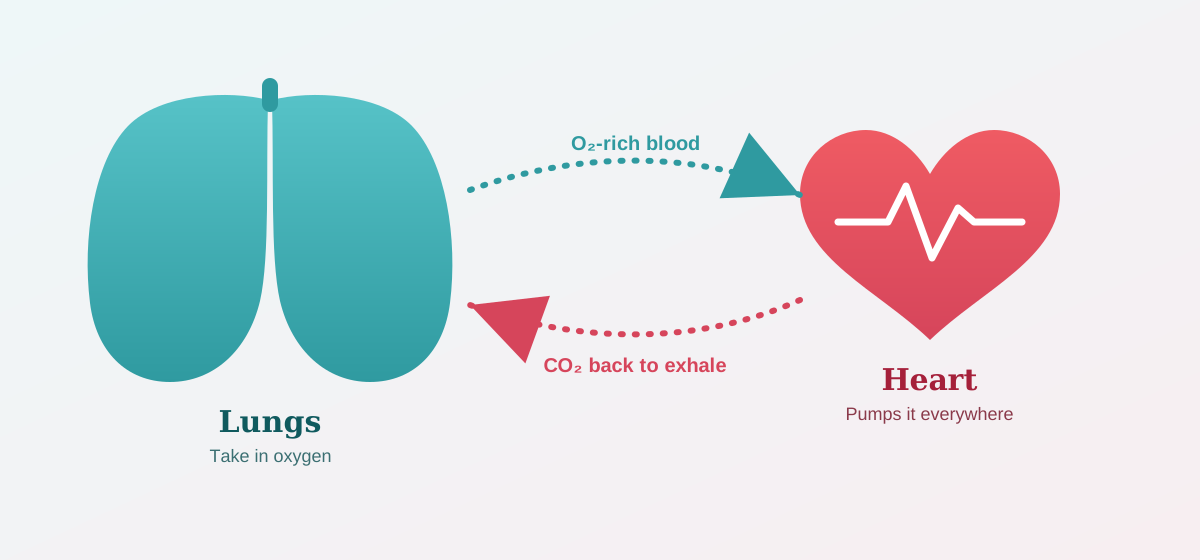
Your lungs and heart form one connected system. The lungs load your blood with oxygen and remove carbon dioxide; the heart pumps that oxygen-rich blood to every cell. Because they depend on each other, a strain in one often shows up as a symptom in the other — which is why signs like breathlessness, fatigue or a racing heartbeat deserve attention.
If you've ever jogged for a bus and felt both your breathing and your heartbeat speed up together, you've already noticed something important: your lungs and heart are teammates. They're so closely linked that doctors group them under a single name — the cardiopulmonary system ("cardio" for heart, "pulmonary" for lungs).
In this first guide we'll walk through that partnership in everyday language, then look at the signals worth paying attention to. No jargon, no fear — just a clear picture so you feel more in control of your own body.
The oxygen journey, step by step
Here's the whole trip in five simple steps:
- You breathe in. Air travels down your windpipe into tiny air sacs in the lungs called alveoli.
- Oxygen crosses over. In those air sacs, oxygen slips into the blood while carbon dioxide (a waste gas) moves out.
- The heart takes over. This freshly oxygenated blood returns to the heart, which pumps it out with each beat.
- Delivery to the body. Blood carries oxygen to your brain, muscles and organs so they can make energy.
- The return trip. "Used" blood, now carrying carbon dioxide, comes back to the lungs — and you breathe the waste gas out.
This loop repeats around 20,000 times a day for your breath and roughly 100,000 times a day for your heartbeat, quietly, without you thinking about it. The U.S. National Heart, Lung, and Blood Institute (NHLBI) has a clear overview of how the lungs perform this gas exchange.
Why they rise and fall together
Because the two organs share the same job — getting oxygen where it's needed — a problem in one puts pressure on the other:
- If the lungs can't absorb enough oxygen, the heart pumps harder and faster to make up for it.
- If the heart can't pump efficiently, blood can back up toward the lungs, which can make breathing feel harder.
That's why a single symptom, like feeling winded on the stairs, can come from the lungs, the heart, or both. The American Heart Association and the American Lung Association both stress looking at the whole picture rather than one organ in isolation.
7 everyday warning signs worth noticing
None of these prove anything on their own — many have harmless explanations. But if a sign is new, getting worse, or sticking around, it's a smart reason to talk to a doctor:
- Breathlessness with light effort — feeling winded from stairs or walking that never used to bother you.
- Unusual fatigue — tiredness that rest doesn't fix, sometimes a sign your cells aren't getting enough oxygen.
- A cough that lingers — especially one lasting more than a few weeks.
- Chest tightness or pressure — any chest pain deserves prompt medical attention.
- Swelling in the ankles or feet — fluid can build up when the heart isn't pumping efficiently.
- A racing, fluttering or skipping heartbeat — occasional flutters are common, but frequent ones are worth checking.
- Dizziness or light-headedness — a possible sign the brain isn't getting a steady oxygen supply.
The takeaway
Your lungs and heart are two halves of one oxygen-delivery machine. Understanding that link makes the "why" behind common symptoms much less mysterious — and it makes the next step, actually supporting both organs, far more logical.
That's exactly where we're headed next: the food, movement, breathing and nutrients that give your cardiopulmonary system its best shot.
Next in the series · Step 2 Nutrients & daily habits that support lung and heart health The practical, science-backed things you can actually do — starting today. →